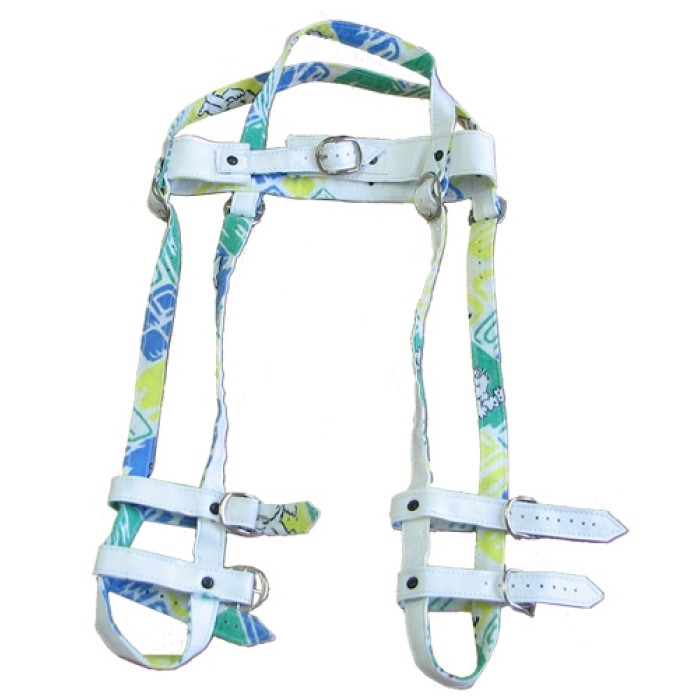
Used for hip dysplasia as prescribed by a doctor.
Materials: textile and flannel fabric.
| Size | Age | Height | Weight |
| 0 | 0-3 | 50-60 cm | 3-6 kg |
| 1 | 3-6 | 60-65 cm | 6-8 kg |
| 2 | 6-9 | 70-75 cm | 9-11 kg |
| 3 | 9-12 | 80-85 cm | 12-14 kg |
| 4 | 12+ | 90-95 cm | 15-17 kg |
DTS - also known as hip dysplasia, manifests itself in different ways in children. The developmental defect of the hip joints can manifest itself not only in newborns, but also in older children. The first time, during an examination by an orthopedist, no matter how professional he is, it is sometimes impossible to 100% determine the joints for abnormality. So what is DTS? Many children with hip dysplasia have weak ligaments and that is why the femoral head comes out of its normal position. As a result of such deviations, this can cause pre-dislocation or subluxation of the femur.
According to statistics, about 60% of babies with DTS are first-borns, and 30-50% of children had breech presentation. In Ukraine (2004), congenital dysplasia, subluxation and dislocation of the hip occur in 50 cases per 1000 children, i.e. 5% of newborns. If this disease is not given due attention and treated in time, the child may develop long-term complications, including unequal limb length, osteoarthritis, a specific gait, pain or insufficient mobility.
One of the causes of hip dysplasia is tight swaddling, as a result of which the child is deprived of the ability to move freely.
To treat such deviations in a child in the early stages, doctors recommend using Pavlik stirrups. To do this, for one to two months, it is necessary to support the baby's legs in a bent and spread position with the help of stirrups. They give the child some freedom of movement, but do not allow the legs to be brought together and straightened. Pavlik stirrups are effective in 90% of cases of dysplasia and in 80% of cases of true dislocation. Doctors often recommend wearing Pavlik stirrups around the clock at first.
Attention! If you have already managed to buy Pavlik stirrups, do not put them on yourself. The first time Pavlik's belts are put on by a doctor - this is mandatory.
Top sales