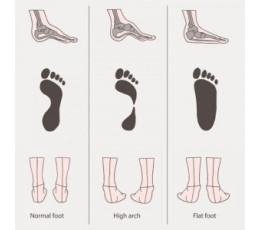
It is quite possible to prevent flat feet if you act comprehensively. Timely visits to an orthopedist, wearing orthopedic shoes, and gymnastics are important here. About all these points it is worth telling in more detail.
Control over the development of the spine and feet
 There may be several reasons for the development of flat feet: congenital predisposition, neurological problems, excess weight, vitamin D deficiency (rickets), incorrect setting of feet when walking. Each of these conditions manifests itself at different times, so regular checkups with an orthopedist are important.
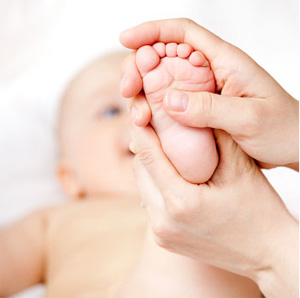
For the first time, the child is shown to the doctor at the age of one month. At this time, it is already possible to determine congenital pathologies in the development of the skeleton. The next two appointments should be planned for 3 and 6 months – this will make it possible to detect rickets in time. Another visit to the orthopedist should be paid in another six months. At 12 months, the child is already moving more, has already taken or is preparing to take the first steps, so it is important to check how the spine develops, in what condition the joints, arches of the feet are.
If there are no serious problems, the next scheduled examination by an orthopedist should take place when the child turns 2-3 years old. Posture, gait, feet are studied, the proportions of the child's legs are checked.
How to prevent flat feet with orthopedic shoes
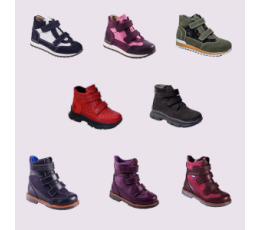
Wearing the right shoes is recommended from the time when the child learns to walk, that is, from 10-12 months. Special attention should be paid to the selection of orthopedic shoes if there is a predisposition to flat feet (for example, heredity). Such advice is not made to please shoe manufacturers, but for obvious reasons: when a child learns to walk, he, to keep his balance, rests incorrectly on his feet. At the same time, the foot of a modern little person does not receive the necessary gymnastics in the form of constant walking on uneven surfaces. It is very important during this period to pay attention to the setting of the feet, which is exactly what the right shoes help.
Such shoes are distinguished by:
- availability of special supporting supinators;
- Thomas' special beveled heels that distribute the load on the feet;
- rigid, rather high backs that do not allow the feet to "walk";
- good fixing fasteners;
- the upper of shoes sewn from natural and high-quality materials;
- a special design of the shoe block on which the shoes are made.
The next important point is the exercises for the feet.
Barefoot walks and gymnastics
Not everyone knows how to prevent flat feet by walking barefoot, and it really works.
Walking barefoot means walking on an uneven surface. Pebbles help well. You can put pebbles in the box and let the baby trample on them for 10-15 minutes. This exercise trains the arches of the feet, allows them to form correctly. It is good if the child regularly walks on warm ground or on sand, but the best preventive effect is given by pebbles. If it is not possible to bring pebbles home, massage mats for the prevention of flat feet will be a great replacement.
Gymnastics for the prevention of flat feet is both useful and fun. The exercises are simple and, if desired, mom or dad can turn classes into a game:
- Walk with the child on the toes, then go to the heels, then to the outer parts of the feet. Do this several times.
- Scatter small balls or cubes on the floor (but with smoothed edges), and let the child lift each of them with his toes. Cubes and balls can be replaced with other objects (for example, pencils / pens), eliminating, at the same time, the risk of injury to the feet.
- Put the gymnastic stick on the floor, show the child how to roll it with your feet, and ask him to repeat.
These are the simplest exercises, an orthopedist can recommend another complex, but the main thing is the correct and regular preventive effect on the baby's feet.
We tried to answer the question "how to prevent flat feet" as fully as possible. These tips should help to start effective prevention and avoid the development of the disease, because it is much more difficult to treat it.